
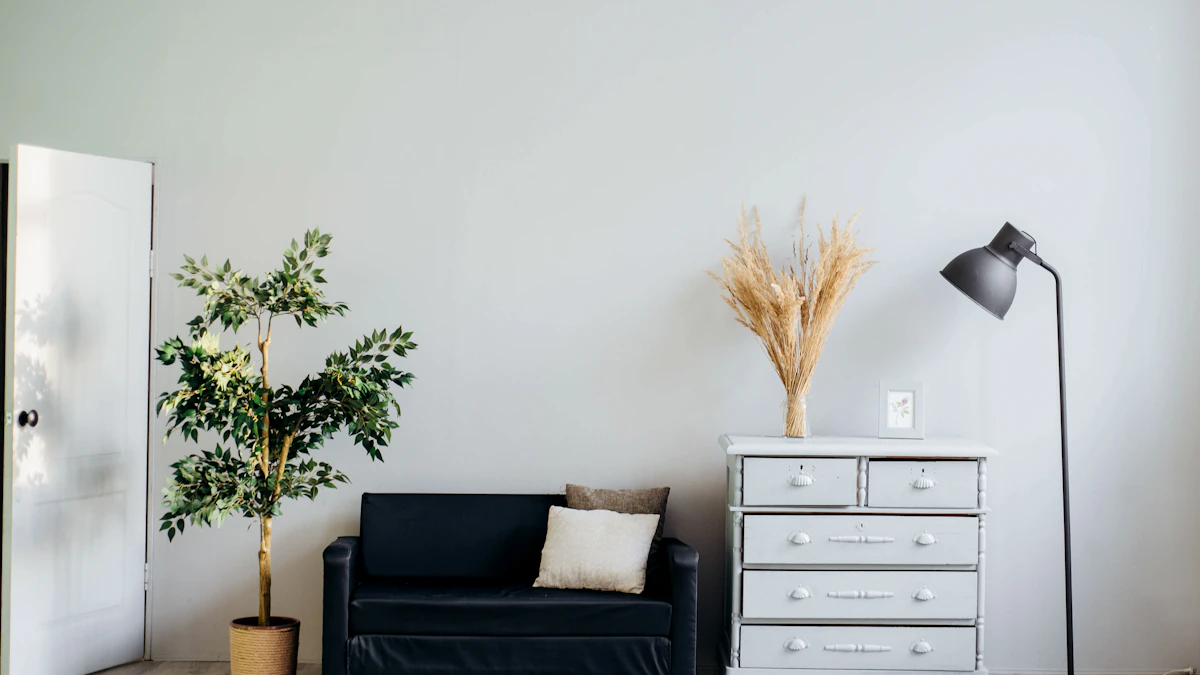
This guide walks you through exactly how to declutter your room in a systematic, stress-free way — and why it works so well for your mental health.
Why a Cluttered Room Affects Your Mental Health
Before diving into the how, let's talk about the why. Research published in the Personality and Social Psychology Bulletin found that people who described their homes as cluttered had higher levels of cortisol — the stress hormone — throughout the day. A messy environment constantly signals to your brain that there is unfinished business, that there are tasks left undone.
Increased anxiety: Visual clutter competes for your attention and overloads your senses.
Poor sleep quality: Studies suggest sleeping in a cluttered room is linked to sleep disturbances.
Reduced focus: Your brain finds it harder to concentrate when surrounded by disorder.
Low motivation: A messy space can make you feel stuck before you even start a task.
On the flip side, decluttering triggers a sense of accomplishment, clarity, and control — feelings that have a direct positive impact on your mood and productivity.
Before You Begin: The Right Mindset
Many people avoid decluttering because they feel overwhelmed before they even start. The trick is to stop thinking about it as one giant project and break it into small, manageable actions. You are not trying to redecorate your entire room in one afternoon. You are simply making your space feel a little more like you.
"You don't have to be extreme. Just start somewhere."
Set a timer for 20–30 minutes. Play some music you enjoy. And commit to just that one session.
Step-by-Step: How to Declutter Your Room
Step 1 – Empty and Sort (The Big Pile Method)
Pick one zone to start — your study desk, your wardrobe, or the floor. Take everything off or out of that space and place it on your bed. Now sort everything into three piles:
Keep: Things you use regularly and love.
Donate/Sell: Things in good condition but no longer needed.
Trash: Broken, expired, or genuinely useless items.
The reason this works is that physically separating your stuff forces you to evaluate each item individually instead of leaving it where it is and calling it "I'll deal with this later."
Step 2 – The One-Year Rule
For items you're on the fence about, apply the one-year rule: Have you used this in the past year? If the answer is no, it's very likely clutter. This is especially useful for clothes, stationery, gadgets, and books you've never read.
Step 3 – Find a Home for Everything
Once you have your "Keep" pile, every item needs a designated place. Clutter forms when things don't have a fixed home. A cable that doesn't belong anywhere will always end up on the floor. A pen without a pot will always be floating around.
Use these simple storage ideas:
Desk organisers or small trays for stationery and cables
Hooks behind the door for bags, jackets, and accessories
Under-bed storage boxes for seasonal items
Shelf dividers or small boxes inside the wardrobe
Step 4 – The 5-Minute Daily Reset
Once your room is decluttered, the secret to keeping it that way is a 5-minute daily reset before bed. Put things back in their homes, fold the clothes you've left out, and clear your desk. This tiny habit prevents clutter from accumulating again.
Room-by-Room Decluttering Checklist
Zone | Common Clutter | Quick Fix |
|---|---|---|
Study Desk | Old notes, unused stationery, food wrappers | Use a tray + one drawer for essentials only |
Wardrobe | Clothes that don't fit, unworn items | One-in-one-out rule when buying new clothes |
Floor | Bags, shoes, wires, random objects | Add hooks and a shoe rack near the door |
Bedside Table | Chargers, empty bottles, books | Keep only: water bottle, one book, phone charger |
Under the Bed | Random boxes, forgotten items | Use flat storage bins and label them |
Emotional Clutter vs Physical Clutter
Interestingly, the items you hold onto often reflect emotional attachments. Old letters from an ex, gifts you feel guilty throwing away, school textbooks you finished years ago — these things can trap you in the past. Part of decluttering is learning to make peace with letting go. Keeping an item "just in case" is usually fear disguised as practicality.
A helpful exercise: Hold the item, ask yourself honestly — "Does this serve my life now, or am I holding on out of guilt or fear?" This is inspired by the KonMari method popularised by Marie Kondo, and it's surprisingly effective.
Digital Clutter Counts Too
While you're at it, don't forget your digital space. A cluttered phone or laptop desktop has a similar effect on your brain as a messy room. Take 15 minutes to:
Delete apps you haven't opened in 3 months
Clear your downloads folder
Organise photos into folders or delete duplicates
Unsubscribe from email lists you never read
The Feel-Good Effect: What Changes After Decluttering
Most people who declutter report almost immediate emotional relief. Here's what you can expect:
Better sleep — A tidy bedroom signals to your brain it's a safe, restful space.
More energy in the morning — You can find everything quickly without frustration.
Improved focus during study/work — Less visual noise means fewer distractions.
A genuine sense of pride — Your room becomes a place you want to be in.
Common Mistakes to Avoid
Buying more storage before decluttering: More boxes just store more junk.
Trying to do it all in one day: Burnout leads to giving up halfway.
Keeping things out of guilt: Gifts you don't use are still clutter.
Organising instead of decluttering: Neatly arranging junk is not the same as removing it.
The Four-Box Categorization Framework
When sorting through drawers and wardrobes, ambiguity is the enemy of progress. Bringing four physical containers into the room forces definitive, unambiguous decisions for every single object:
Container Label | Decision Criteria | Next Immediate Action |
|---|---|---|
Box 1: Keep & Relocate | Items actively used within the past 6 months that belong elsewhere in the home | Return to their designated homes immediately after the session |
Box 2: Donate or Sell | Functional, clean clothing and books that no longer align with your current lifestyle | Drop off at local NGOs, thrift stores, or list on secondary marketplaces within 48 hours |
Box 3: Recycle or Repair | Electronic e-waste, scrap paper, or garments needing minor stitch repair | Take to e-waste disposal centers or place in tailor repair bag |
Box 4: Trash / Landfill | Broken, expired, or non-recyclable items with zero functional utility | Tie the garbage bag immediately and take it outside to prevent second-guessing |
The One-In, One-Out Retention Rule
Decluttering once is therapeutic, but preventing clutter from returning requires systemic boundaries. Institute the One-In, One-Out Rule: whenever a new item enters your living space — whether a jacket, a pair of shoes, or a coffee mug — an older item in the same category must be donated, sold, or recycled. This hard equilibrium naturally caps material accumulation and forces intentionality before every purchase.
Conclusion
Decluttering your room is not just about aesthetics — it's a genuine act of self-care. When your physical space is orderly, your mind has more room to breathe. You feel calmer, more in control, and more capable of tackling whatever comes your way. Start with one corner today, spend 20 minutes, and notice the shift. You don't have to be perfect — you just have to begin.


Join the Conversation
0 CommentsNo comments yet
Be the first to share your thoughts and start the discussion.