
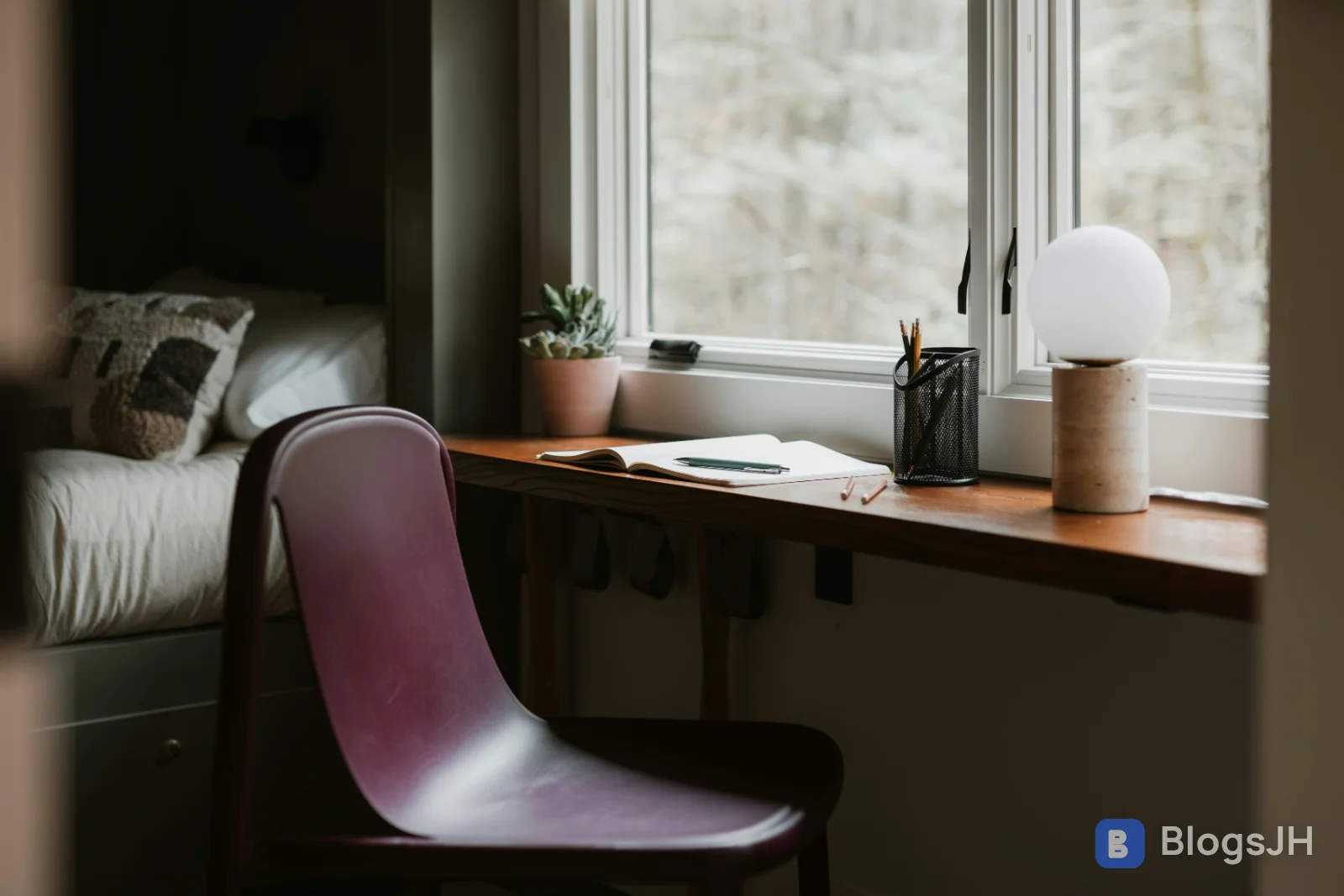
Every student preparing for board exams, JEE, NEET, UPSC, or any competitive examination eventually faces the same question: how do people study for 10, 12, or even 14 hours a day without burning out?
You have probably tried it yourself. You wake up early, sit at your desk with determination, study intensely for three hours — and then hit a wall. Your eyes glaze over. Your mind wanders. You pick up your phone "just for a minute" and lose an hour. By evening, you have studied maybe five or six hours total, and half of that was unfocused.
Here is the truth that most study advice ignores: studying for long hours is not about willpower. It is about energy management, strategic breaks, physical health, and mental sustainability. The students who study 10+ hours daily are not superhuman. They have simply built a system that prevents exhaustion instead of fighting through it.
This guide breaks down the exact science, strategies, and daily habits that make long study sessions sustainable — without sacrificing your health, sleep, or sanity.
Why Your Brain Gets Tired — And Why Willpower Is Not the Solution
Before we discuss how to study longer, you need to understand why your brain gets tired in the first place. Spoiler: it is not because you are lazy or undisciplined.
The Neuroscience of Mental Fatigue
Your brain accounts for roughly 2% of your body weight but consumes 20% of your total energy. When you study — reading, analysing, memorising, problem-solving — your prefrontal cortex (the part responsible for focused thinking) works overtime. This region has a limited capacity for sustained attention.
Research from the University of Illinois found that sustained attention on a single task declines significantly after 40-50 minutes. After that, your brain does not stop working — it starts working less efficiently. You read the same paragraph three times without absorbing it. You stare at a maths problem for 20 minutes without progress. You feel "tired" even though you have been sitting still.
This is not laziness. This is your brain's way of saying: "I need a reset."
Why Willpower Fails
Willpower is a depletable resource. A landmark study by psychologist Roy Baumeister demonstrated that people who exert self-control on one task perform worse on subsequent tasks — a phenomenon called ego depletion. If you spend your morning forcing yourself to study through fatigue, you will have less mental energy for the afternoon.
The students who study 10+ hours are not using more willpower than you. They are using less — because their system is designed so that studying feels sustainable, not like a constant battle against their own brain.
The 90-Minute Study Block System
The single most effective technique for sustained long-hour studying is the 90-minute ultradian rhythm block.
What Are Ultradian Rhythms?
Your body operates on cycles called ultradian rhythms — 90-minute periods of high neurological activity followed by 20-minute periods of lower activity. This cycle runs throughout the day, not just during sleep. Research by sleep scientist Nathaniel Kleitman (the same researcher who discovered REM sleep) found that our brains naturally cycle between high focus and low focus approximately every 90 minutes.
Fighting this cycle is like swimming against the current. Working with it is like riding the wave.
How to Structure Your 90-Minute Blocks
Each study block follows this structure:
0-5 minutes: Set a clear goal for this block. Write it down. Example: "Complete NCERT Chapter 7 exercises, problems 1-15."
5-45 minutes: Deep focus — no phone, no music with lyrics, no interruptions. This is your peak concentration window.
45-50 minutes: Micro-break — stand up, stretch for 30 seconds, take 5 deep breaths. Do NOT check your phone. Sit back down.
50-90 minutes: Second focus wave — continue studying. Your brain has had a micro-reset and can sustain attention for another 40 minutes.
90 minutes: STOP. Take a full 15-20 minute break. Leave your desk completely.
Why this works better than the Pomodoro Technique for long study days:
The popular Pomodoro Technique (25 minutes study, 5 minutes break) is excellent for getting started and beating procrastination. But for 10+ hour study days, the frequent interruptions can prevent you from entering deep flow states — the periods of intense concentration where your learning is most efficient.
The 90-minute block gives your brain enough uninterrupted time to enter deep focus while respecting its natural energy cycles. Use Pomodoro when you cannot get started. Use 90-minute blocks when you need to go deep.
A Complete 12-Hour Study Day Using 90-Minute Blocks
Here is what a full study day looks like with this system:
Block 1 (6:00 AM - 7:30 AM): Hardest subject — fresh brain tackles toughest material
Break (7:30 AM - 8:00 AM): Breakfast + light movement
Block 2 (8:00 AM - 9:30 AM): Second subject — still in morning peak
Break (9:30 AM - 10:00 AM): Walk outside, sunlight exposure, hydrate
Block 3 (10:00 AM - 11:30 AM): Practice problems or previous year papers
Break (11:30 AM - 12:00 PM): Light snack, stretching
Block 4 (12:00 PM - 1:30 PM): Third subject or revision
LONG BREAK (1:30 PM - 3:00 PM): Lunch + 20-minute power nap + complete rest
Block 5 (3:00 PM - 4:30 PM): Lighter subject or creative study (mind maps, flashcards)
Break (4:30 PM - 5:15 PM): Physical exercise — 30-minute walk or workout
Block 6 (5:15 PM - 6:45 PM): Revision of morning topics (spaced repetition)
Break (6:45 PM - 7:15 PM): Snack, family time, relax
Block 7 (7:15 PM - 8:45 PM): Mock test practice or weak area focus
Wind down (8:45 PM - 10:00 PM): Dinner + light revision of flashcards + next day planning
10:00 PM: Sleep — absolutely non-negotiable
Total focused study time: 10.5 hours across 7 blocks
Total break time: 3.5 hours (including lunch, exercise, and wind-down)
Sleep: 8 hours (10 PM to 6 AM)
Notice that the day includes generous breaks, a power nap, physical exercise, and 8 hours of sleep. This is not a punishment schedule. This is a performance schedule — designed for maximum output over weeks and months, not just one heroic day.
The 5 Pillars of Sustainable Long-Hour Studying
The 90-minute block system is the framework. But it will collapse without these five supporting pillars:
Pillar 1: Sleep Is Non-Negotiable
This is the pillar most students sacrifice first — and it is the most destructive mistake you can make.
Sleep is not wasted time. It is when your brain consolidates memories, strengthens neural connections, and clears metabolic waste. A study published in Nature found that students who slept 7-8 hours after studying retained 40% more information than those who pulled all-nighters.
The math is simple:
10 hours of study + 8 hours of sleep = you remember 80-90% of what you studied
14 hours of study + 4 hours of sleep = you remember 40-50% of what you studied
The student who sleeps properly retains more information in fewer hours than the student who sacrifices sleep to study more. Sleep is not the enemy of productivity. Sleep deprivation is.
Sleep rules for exam preparation:
Sleep and wake at the same time every day — including weekends
Stop screens 1 hour before bed — blue light suppresses melatonin
Keep your room cool, dark, and quiet
No caffeine after 2 PM — caffeine has a half-life of 5-6 hours
If you must nap, keep it under 20 minutes and before 3 PM
Pillar 2: Nutrition Fuels Your Brain
Your brain runs on glucose. If you skip meals, eat junk food, or survive on biscuits and chai during study sessions, your cognitive performance will crash — no matter how motivated you are.
What to eat on study days:
Breakfast (most important meal):
Eggs + whole wheat toast + banana — protein + complex carbs + potassium
Oats with nuts and fruit — slow-release energy for 3-4 hours
Dahi (curd) with poha or upma — light but sustaining
Avoid: Sugary cereals, white bread with jam, heavy parathas with butter (causes energy crash)
Study snacks (between blocks):
Handful of almonds or walnuts — omega-3 fatty acids boost brain function
Dark chocolate (2-3 small pieces) — improves blood flow to the brain
Banana — quick natural energy without the crash
Makhana (fox nuts) — light, crunchy, and surprisingly nutritious
Avoid: Chips, biscuits, samosas, sugary drinks — they cause energy spikes followed by crashes
Lunch:
Dal + rice + sabzi + salad — balanced Indian meal
Keep portions moderate — overeating causes drowsiness (the post-lunch slump is real)
Include protein (dal, paneer, chicken, eggs) — protein keeps you alert longer than carbs alone
Dinner:
Light and early — eat at least 2 hours before sleep
Roti + sabzi + dahi — avoid heavy, oily food at night
A glass of warm milk before bed can genuinely help sleep quality
Hydration:
Keep a 1-litre water bottle at your desk and finish it every 3-4 hours. Mild dehydration (just 1-2% body water loss) reduces concentration by up to 25%. Most students are chronically under-hydrated without realising it. Read more about the benefits of proper hydration here.
Pillar 3: Physical Movement Is Mandatory
Sitting at a desk for 10+ hours without physical activity is not just unhealthy — it actively reduces your ability to study effectively.
Research from the University of British Columbia found that regular aerobic exercise increases the size of the hippocampus — the brain region responsible for learning and memory. A 2019 meta-analysis published in British Journal of Sports Medicine concluded that even a single bout of moderate exercise improves attention, concentration, and memory for up to 2 hours afterwards.
Minimum daily movement for study days:
Morning: 10 minutes of stretching or yoga after waking up — activates your body and mind
Mid-day: 30-minute walk or light exercise — this is your cognitive reset button
Between blocks: Stand up, stretch, do 10 squats or 20 jumping jacks — takes 60 seconds, prevents stiffness
Evening: If possible, 15-20 minutes of any physical activity — running, cycling, badminton, dancing, anything that raises your heart rate
Students who include 30-45 minutes of daily exercise during exam preparation consistently report better focus, improved mood, deeper sleep, and higher study efficiency. Exercise is not stealing time from your studies — it is multiplying the value of every hour you study.
Pillar 4: Strategic Subject Rotation
One of the fastest ways to burn out is studying the same subject for 5-6 hours straight. Your brain craves variety — different subjects activate different neural networks, which prevents the fatigue that comes from overusing a single cognitive pathway.
Rules for subject rotation:
Never study the same subject for more than 2 consecutive blocks (3 hours maximum)
Alternate between "heavy" and "light" subjects: Follow a Physics block with an English block. Follow Mathematics with Biology.
Alternate between reading and doing: Follow a theory-heavy session with a practice-problem session. Follow note-making with flashcard review.
Save your hardest subject for the morning: Your prefrontal cortex is strongest in the first 3-4 hours after waking. Do not waste this peak on easy tasks.
Use evenings for revision, not new learning: Your brain is better at consolidating existing knowledge in the evening than absorbing new complex information.
Example rotation for a Class 12 Science student:
Block 1 (Morning): Physics — numericals and derivations (hardest subject first)
Block 2: Chemistry — organic reaction mechanisms
Block 3: Mathematics — calculus practice problems
Block 4: English — literature answers and comprehension
Block 5: Biology — diagrams and flowcharts (lighter, visual study)
Block 6: Revision — Physics and Chemistry topics from morning
Block 7: Mock test or weak area focus
Pillar 5: Environment Design
Your study environment either supports your focus or silently destroys it. Most students underestimate how much their surroundings affect their ability to concentrate.
The ideal study environment:
Desk and chair:
A dedicated study desk — not your bed, not the sofa, not the dining table (your brain associates these with relaxation and eating, not studying)
A chair that supports your back — poor posture causes discomfort, which causes distraction
Desk should have only what you need for the current study block — textbook, notebook, pen, water bottle. Everything else goes away.
Phone management (the #1 distraction killer):
Phone goes in another room during study blocks. Not on silent. Not face-down on your desk. In another room.
If you need your phone for study apps (like Anki), enable Do Not Disturb mode and delete social media apps during exam season
Use a physical timer or clock instead of your phone timer — every time you pick up your phone to "check the time," you risk getting pulled into notifications
Tell your family and friends: "I am studying from 6 AM to 1:30 PM. Please do not call or message unless it is an emergency."
Lighting:
Natural daylight is best — sit near a window if possible
If studying at night, use a warm white desk lamp (not harsh overhead fluorescent lights)
Avoid studying in dim light — it strains your eyes and makes you drowsy
Noise:
Complete silence works best for most people during focused study
If you need background sound, use white noise, brown noise, or instrumental lo-fi music (no lyrics — lyrics activate your language processing centre and compete with reading)
If your home is noisy, invest in basic earplugs or noise-cancelling earbuds — this is one of the highest-ROI purchases a student can make
Temperature:
Slightly cool rooms (20-22°C) are optimal for concentration
Too warm makes you drowsy. Too cold makes you uncomfortable.
If you cannot control room temperature, dress in layers
How to Handle the Afternoon Slump
Almost every student experiences a dramatic energy crash between 1 PM and 3 PM. This is not a character flaw — it is biology. Your circadian rhythm naturally dips in the early afternoon, regardless of how much sleep you got.
How to beat the afternoon slump:
Take a 20-minute power nap immediately after lunch. Set an alarm. Do not exceed 20 minutes — longer naps cause sleep inertia (grogginess). A NASA study found that a 20-minute nap improved alertness by 54% and performance by 34%.
Eat a moderate lunch — not too heavy, not too light. Heavy meals divert blood flow to your digestive system, away from your brain.
Get sunlight exposure after lunch — even 10 minutes of natural light resets your circadian clock and boosts alertness.
Schedule lighter study tasks for the post-lunch block — flashcard review, mind mapping, diagram practice, or revision of already-familiar material. Save the heavy problem-solving for morning and evening.
Do a 5-minute physical activity burst before sitting down for Block 5 — jumping jacks, push-ups, a brisk walk around the house. This spikes your heart rate and delivers a burst of oxygen to your brain.
The Role of Caffeine — Use It Strategically, Not Desperately
Caffeine is the world's most widely used cognitive enhancer — and for good reason. It genuinely improves alertness, reaction time, and short-term focus. But most students use it wrong.
How to use caffeine strategically:
Delay your first coffee until 9-10 AM — your cortisol (natural alertness hormone) peaks between 7-9 AM. Drinking coffee during this window wastes its effect and builds tolerance faster.
Optimal dose: 100-200 mg (1-2 cups of coffee or 2-3 cups of tea). More than this causes jitteriness, anxiety, and diminishing returns.
Absolute caffeine cutoff: 2 PM. Caffeine has a half-life of 5-6 hours. A coffee at 4 PM means half the caffeine is still in your system at 10 PM, silently destroying your sleep quality even if you fall asleep.
Never use caffeine to replace sleep. Caffeine blocks adenosine (the sleepiness chemical) but does not eliminate it. When caffeine wears off, all the accumulated adenosine hits you at once — the dreaded "crash."
Green tea is an excellent alternative — it contains L-theanine, which provides calm focus without the jittery edge of coffee.
Mental Strategies to Stay Focused for 10+ Hours
1. Set Micro-Goals for Every Block
"I will study Physics for 90 minutes" is a weak goal. "I will solve NCERT Chapter 4 problems 12-25 and check my answers" is a strong goal. The difference is specificity.
Before each 90-minute block, write down exactly what you will accomplish. When you finish the block, check whether you met the goal. This creates a sense of progress and achievement that fuels motivation throughout the day.
2. Use the "Just 10 Minutes" Rule
When you absolutely do not feel like studying — and this will happen, even to the most disciplined students — tell yourself: "I will study for just 10 minutes. If I still want to stop after 10 minutes, I will."
Research on procrastination shows that the hardest part of any task is starting. Once you begin, your brain's task-positive network activates, and continuing becomes easier. In 90% of cases, you will continue well past the 10-minute mark.
3. Track Your Daily Hours
What gets measured gets managed. Keep a simple log:
Date
Block 1: Subject — Start time — End time — Goal met? (Yes/No)
Block 2: Subject — Start time — End time — Goal met? (Yes/No)
... and so on
Total focused hours today: ___
Seeing your daily hours accumulate creates momentum and accountability. On days when you feel like you accomplished nothing, your log will show you the truth — and on days when you genuinely underperformed, it will show you that too, without excuses.
4. Reward Yourself After Every 3 Blocks
Your brain needs dopamine rewards to maintain motivation over long periods. After every 3 completed blocks (approximately 4.5 hours), give yourself a small reward:
15 minutes of your favourite music
A snack you enjoy
A short phone call with a friend
10 minutes of a show or YouTube video
A short walk outside
The key is that the reward is time-limited and planned. "I will watch YouTube for 10 minutes after Block 3" is healthy. "I will check YouTube whenever I feel bored" is a productivity black hole.
5. Eliminate Decision Fatigue
Every decision you make during the day — what to study, which chapter, which book, what to eat — drains a small amount of mental energy. By the afternoon, these micro-decisions accumulate into decision fatigue, leaving you feeling exhausted even before you sit down to study.
How to eliminate decision fatigue:
Plan tomorrow's study schedule tonight. Decide exactly which subjects, which chapters, and which tasks you will do in each block. Write it down. When you wake up, you simply execute — no thinking required.
Prepare your study materials the night before. Stack the right textbooks, notebooks, and stationery on your desk before bed.
Eat the same breakfast every study day. This sounds boring, but it eliminates one more decision. Top performers from athletes to CEOs use this strategy.
Wear simple, comfortable clothes. Do not spend 15 minutes deciding what to wear on a study day.
What to Do When You Hit the Wall
Even with the perfect system, there will be days when you simply cannot focus. Your brain feels foggy. Nothing sticks. You read the same line five times. This is normal — and it does not mean your preparation is failing.
If You Hit the Wall in the Morning
You probably did not sleep well, or you are fighting an illness. Do not force a full study day. Instead:
Do a light revision session (flashcards, formula sheets) instead of heavy new learning
Take a longer morning walk (30-45 minutes) to reset your brain
Consider a shorter study day (6-8 hours instead of 10+) — one suboptimal day will not ruin your preparation, but forcing yourself through brain fog will make the next 2-3 days worse
If You Hit the Wall in the Afternoon
This is the most common crash point. Solutions:
Take your 20-minute power nap — do not skip it
Do a physical activity burst — 50 jumping jacks, a 10-minute walk, or climb stairs
Switch to a completely different subject or study method
Splash cold water on your face — instant alertness boost
Have a small caffeine dose (only if before 2 PM)
If You Hit the Wall Every Day
This is a sign of chronic fatigue or burnout. Common causes:
Sleep debt: You are consistently getting less than 7 hours. Fix this first — everything else is secondary.
Poor nutrition: You are skipping meals or eating mostly junk food. Your brain is literally starving for nutrients.
No physical activity: Your body is stagnant, your circulation is poor, and your brain is not getting enough oxygen.
No rest days: Even during exam preparation, you need at least one half-day off per week. Complete rest. No studying. No guilt. Your brain needs recovery time just like your muscles do after exercise.
Mental health: If you are experiencing persistent anxiety, hopelessness, or inability to concentrate, please talk to a trusted adult, school counsellor, or mental health professional. Managing stress is not weakness — it is wisdom.
The Weekly Recovery Day
This is counterintuitive but critically important: take one half-day off every week.
Research on skill acquisition and memory consolidation consistently shows that rest periods are when the brain integrates and strengthens what it has learned. Musicians who practice 6 days and rest 1 day outperform those who practice 7 days. Athletes who include recovery days build more muscle than those who train every day.
The same principle applies to studying.
Your weekly recovery half-day:
Study lightly in the morning (3-4 hours maximum — revision only, no new topics)
Afternoon completely free — watch a movie, play a sport, meet friends, go for a walk, do absolutely nothing
No guilt. This is not laziness. This is strategic recovery that makes the other 6 days more productive.
Students who take a weekly recovery day consistently report higher motivation, better retention, fewer burnout episodes, and — paradoxically — more total productive hours per week than those who study 7 days without rest.
Common Mistakes Students Make When Trying to Study Long Hours
Counting hours instead of output. Sitting at your desk for 12 hours is meaningless if 5 of those hours were spent daydreaming or scrolling your phone. Track completed tasks, not clock hours.
Skipping all breaks to "save time." This backfires catastrophically. Without breaks, your focus degrades so severely that 10 hours of non-stop study produces less learning than 8 hours with proper breaks.
Sacrificing sleep to add study hours. As discussed above, this is mathematically counterproductive. You retain less, understand less, and burn out faster.
Studying in bed. Your bed is for sleeping. When you study in bed, your brain cannot decide whether to focus or sleep — so it does neither well. Additionally, associating your bed with studying can cause insomnia.
Using social media during breaks. A "5-minute Instagram break" activates your brain's reward system so powerfully that returning to studying feels painful by comparison. Use breaks for physical movement, snacks, or genuine rest — not screen stimulation.
Comparing your hours with others. "My friend studies 14 hours a day" is irrelevant. What matters is your focused output, not someone else's claimed hours. Most people overestimate their study time by 30-50%.
Starting with the easiest subject. Your morning brain is your sharpest brain. Wasting it on easy tasks means your hardest subjects get your worst cognitive performance. Always tackle the hardest subject first.
No planning. Sitting down without a plan and thinking "I will study whatever feels right" leads to aimless, unfocused sessions. Plan your day the night before.
A Realistic Self-Assessment
Before you attempt 10+ hour study days, honestly assess where you are right now:
If you currently study 2-3 hours/day: Do not jump to 10 hours tomorrow. Increase by 1-2 hours per week. Go from 3 → 5 → 7 → 9 → 10+ over a month.
If you currently study 5-6 hours/day: You are close. Add one more 90-minute block and optimise your breaks. You will reach 8-10 hours within two weeks.
If you currently study 8+ hours/day: Focus on quality, not adding more hours. Are you using active recall? Are you doing practice problems? Are you sleeping enough? Optimising existing hours is more valuable than adding exhausted hours.
The goal is not to study the maximum possible hours. The goal is to study the optimal number of hours at the highest possible quality. For most students, that sweet spot is 8-12 hours of genuinely focused study with proper breaks, nutrition, exercise, and sleep.


Join the Conversation
0 CommentsNo comments yet
Be the first to share your thoughts and start the discussion.